
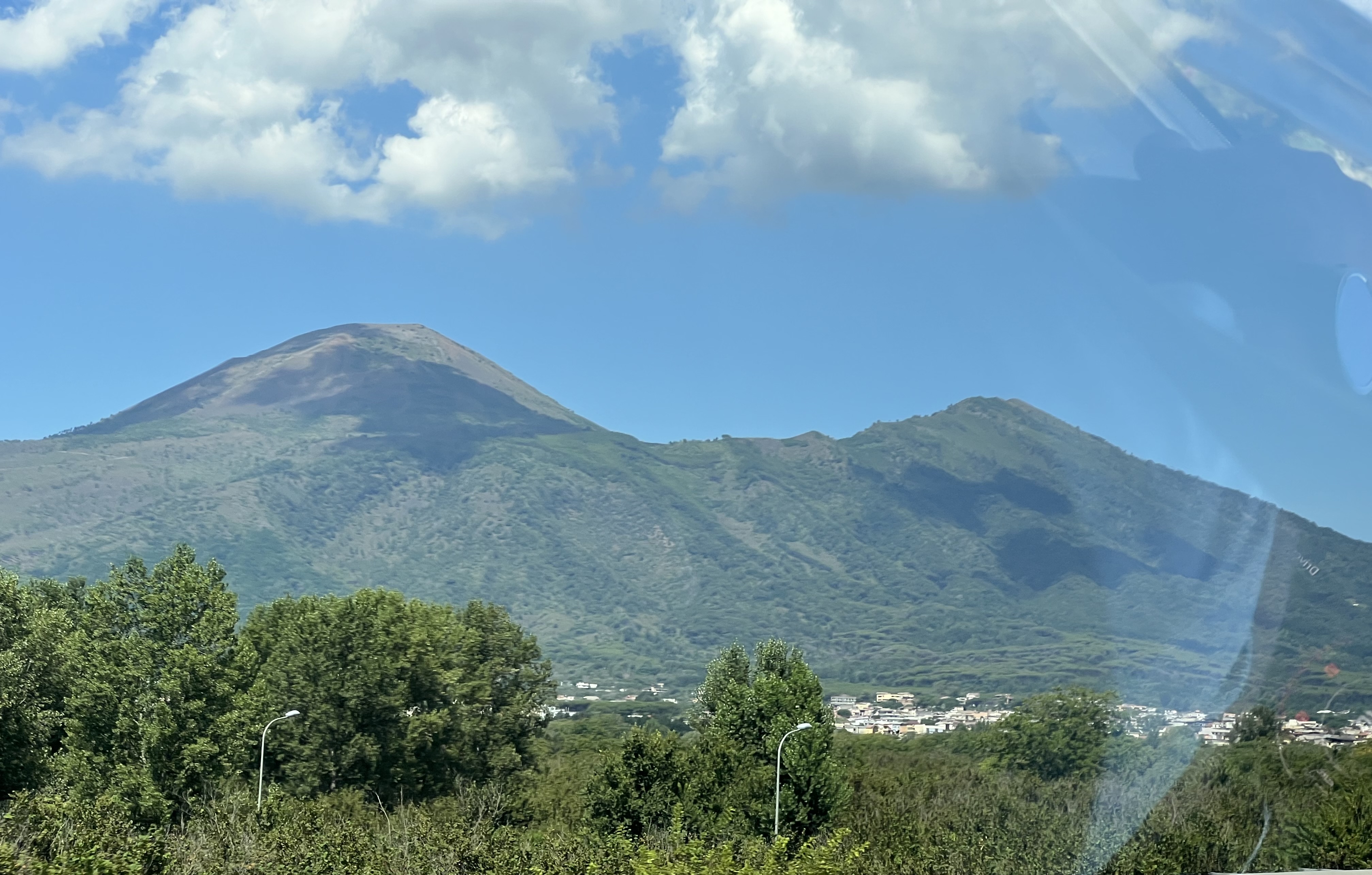
I remember vividly learning about Pompeii and the eruption of Mount Vesuvius in school. The images of people in their final moments stuck with me. I wanted to know all about it. Fast forward to our travels and the opportunity to take a detour to visit the city. I absolutely had to see it. It was a fiercely hot day and we were on our way to Rome for a couple of days so we had Maizy and Dottie in the car with us. We did our research and found out you can take dogs inside if they are small and you carry them. That was convenient, otherwise we would have had to go in shifts.
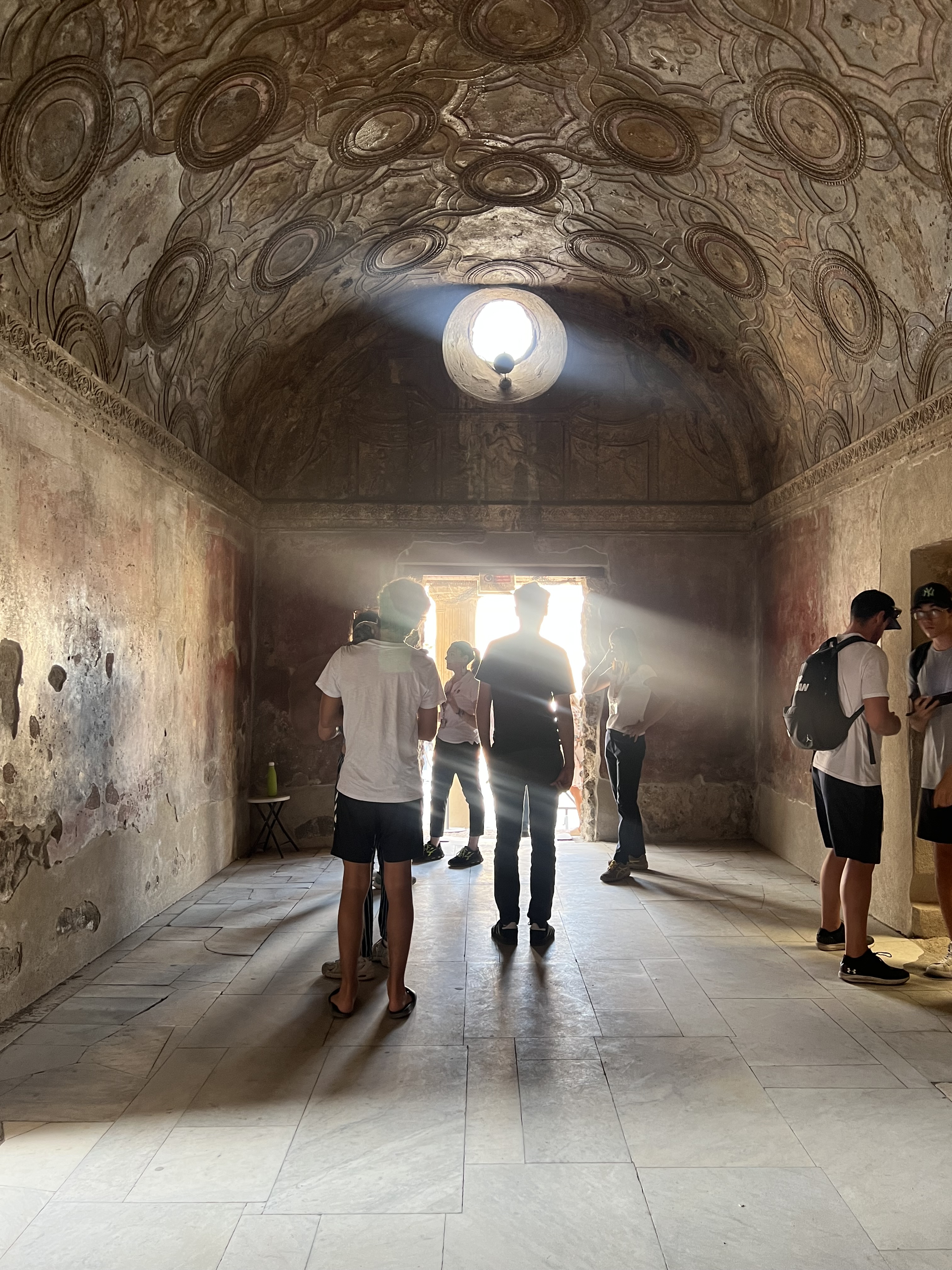
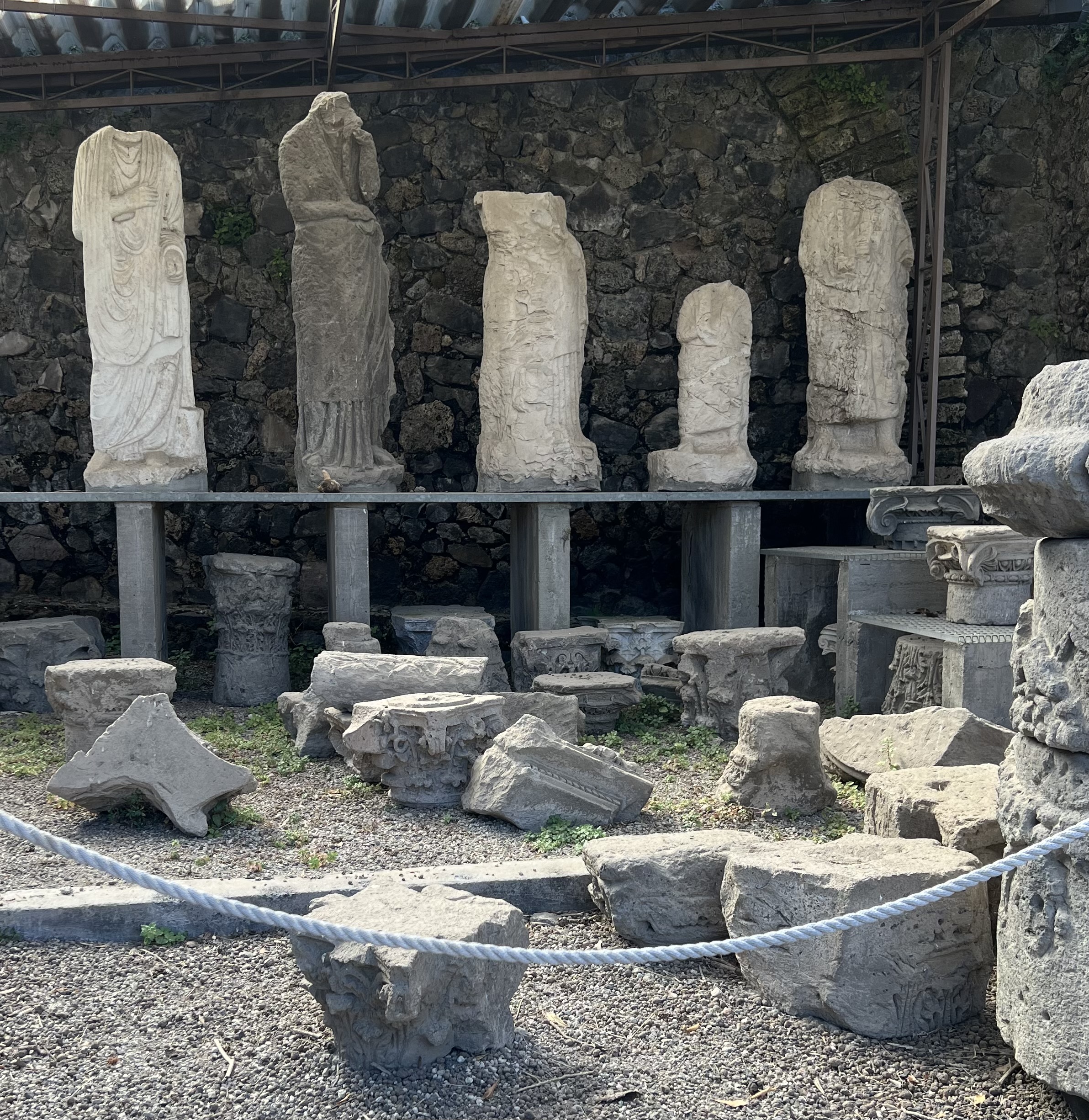
As I was walking, I was thinking to myself that this incredibly detailed, sophisticated Roman city was covered in about 20 feet of ash and volcanic residue after Mount Vesuvius erupted in 79 A.D. I was looking in people’s homes and could somewhat envision what life was like then. You can see paintings on the walls and in front of some homes, you will see the word ‘have’ which means welcome.
There is no known death toll. In some of my research, I discovered that 75-92% of residents escaped when they could see Vesuvius erupting but it is not known how many of them survived. They do know that around 2,000 people died in Pompeii and 300 died in the nearby town of Herculaneum. The people who stayed behind were, most likely, poor and/or had no place else to go. Some scientists say that there were at least 16,000 victims.
The people back then had no idea it was a volcano since it hadn’t erupted in 1,800 years. Before Pompeii, there wasn’t even a word for volcano. Following the devastation, a volcano got its name from the Roman God of the Flame and Metal Forgery named Vulcan.
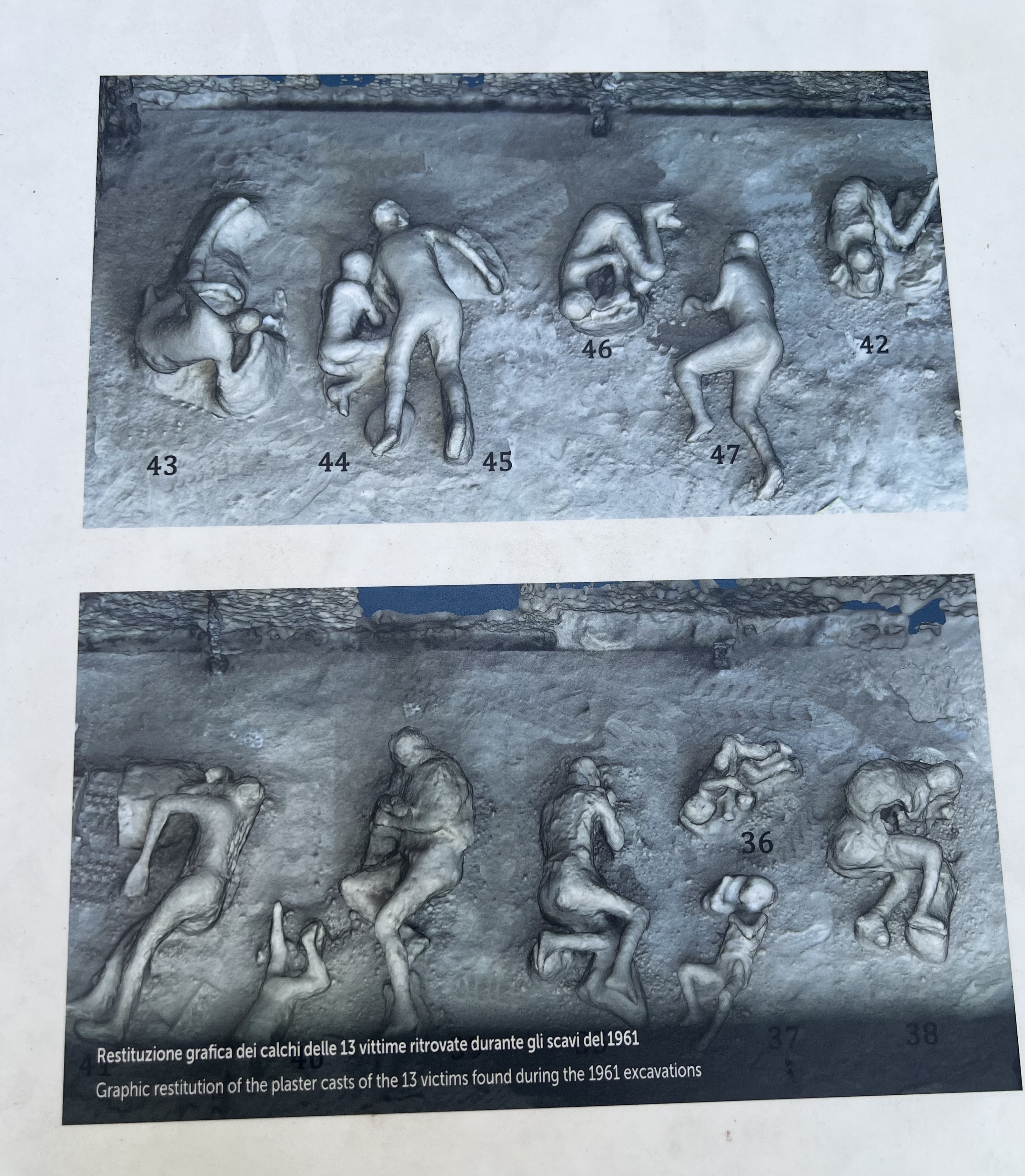
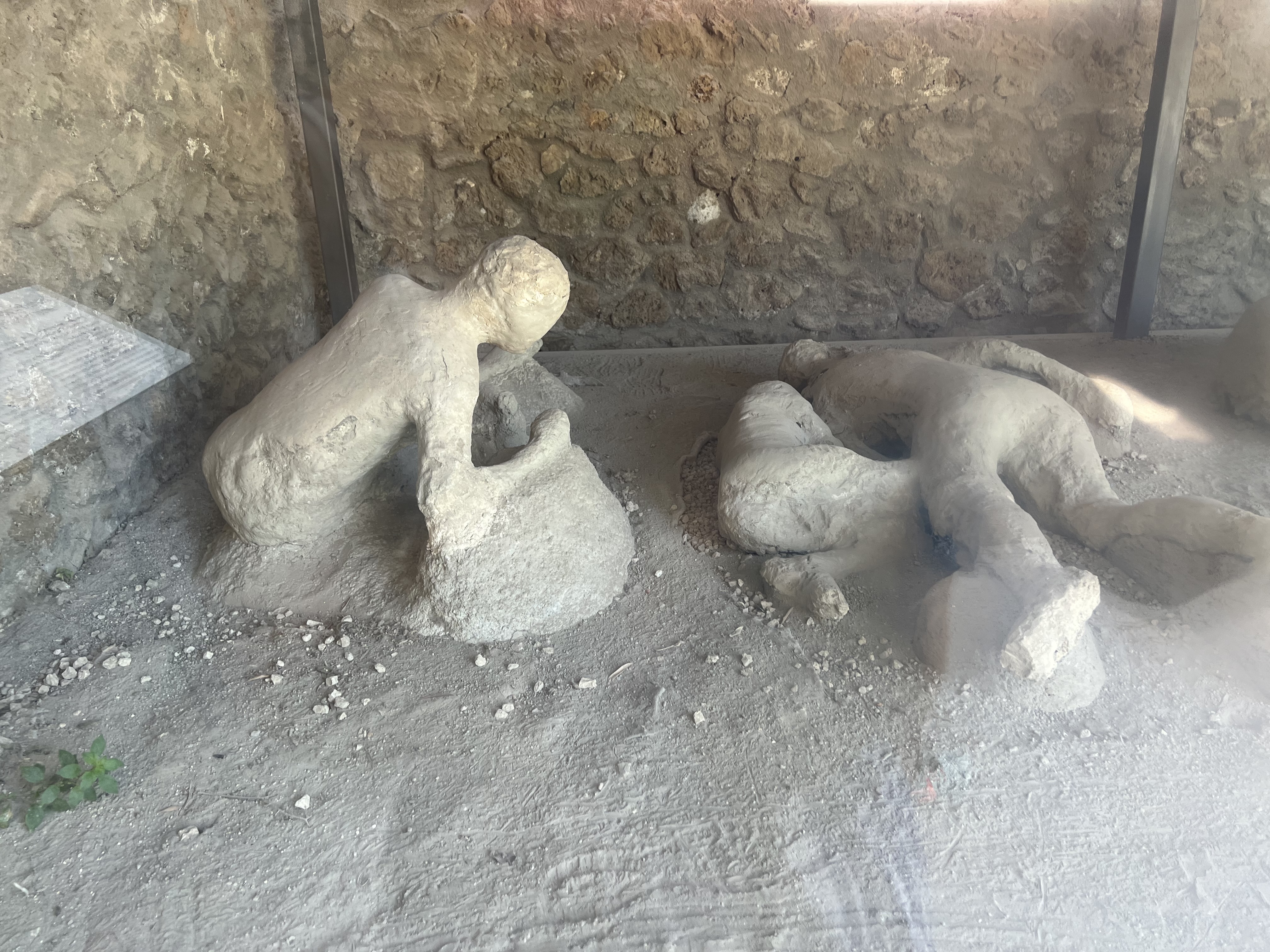
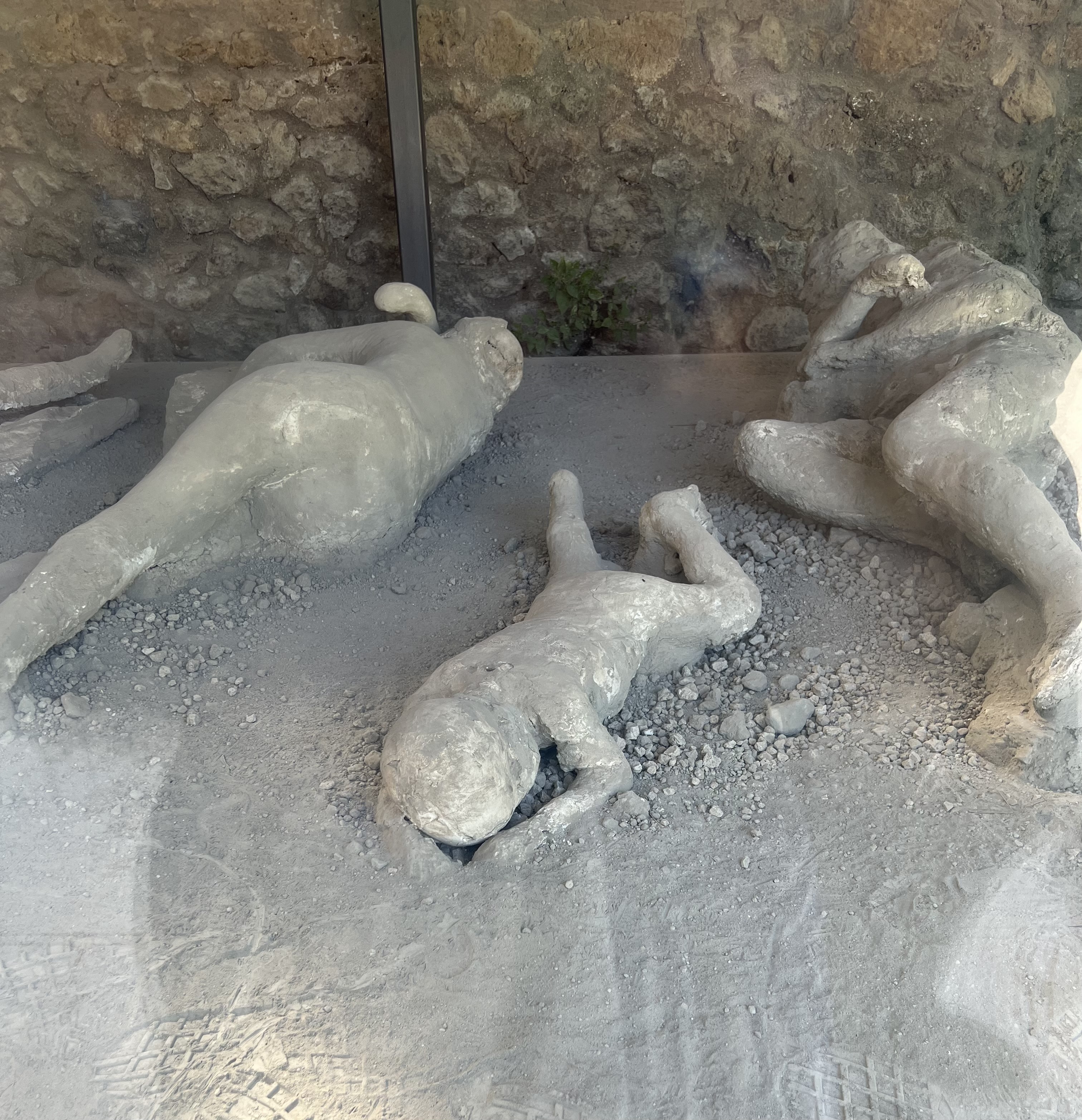
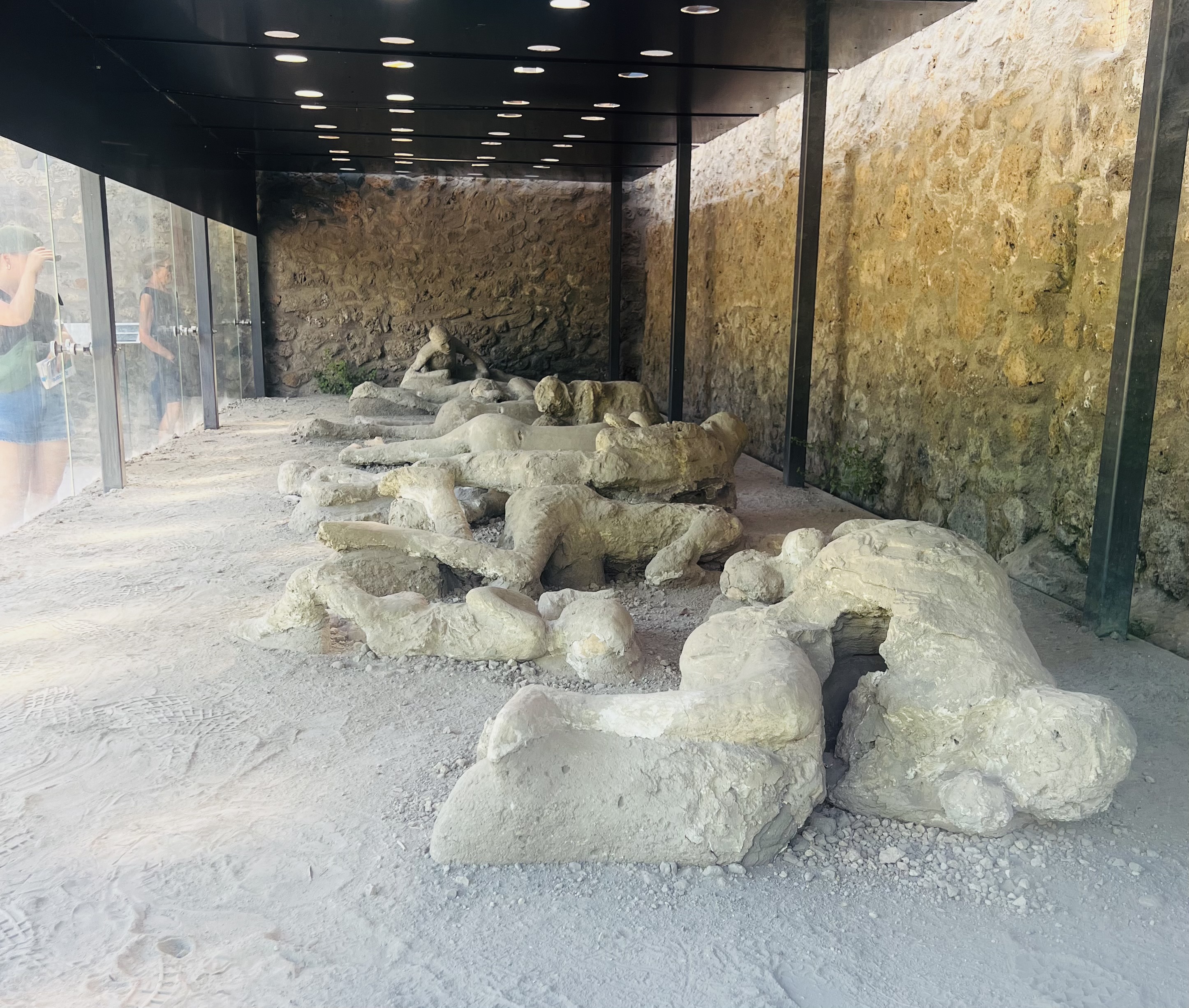
The following is taken from a plaque next to the Orto dei Fuggiaschi which is the Garden of the Fugitives. That’s the of the photo where there is a glass case enclosing 13 casts, the one where there are numerous lights overhead:
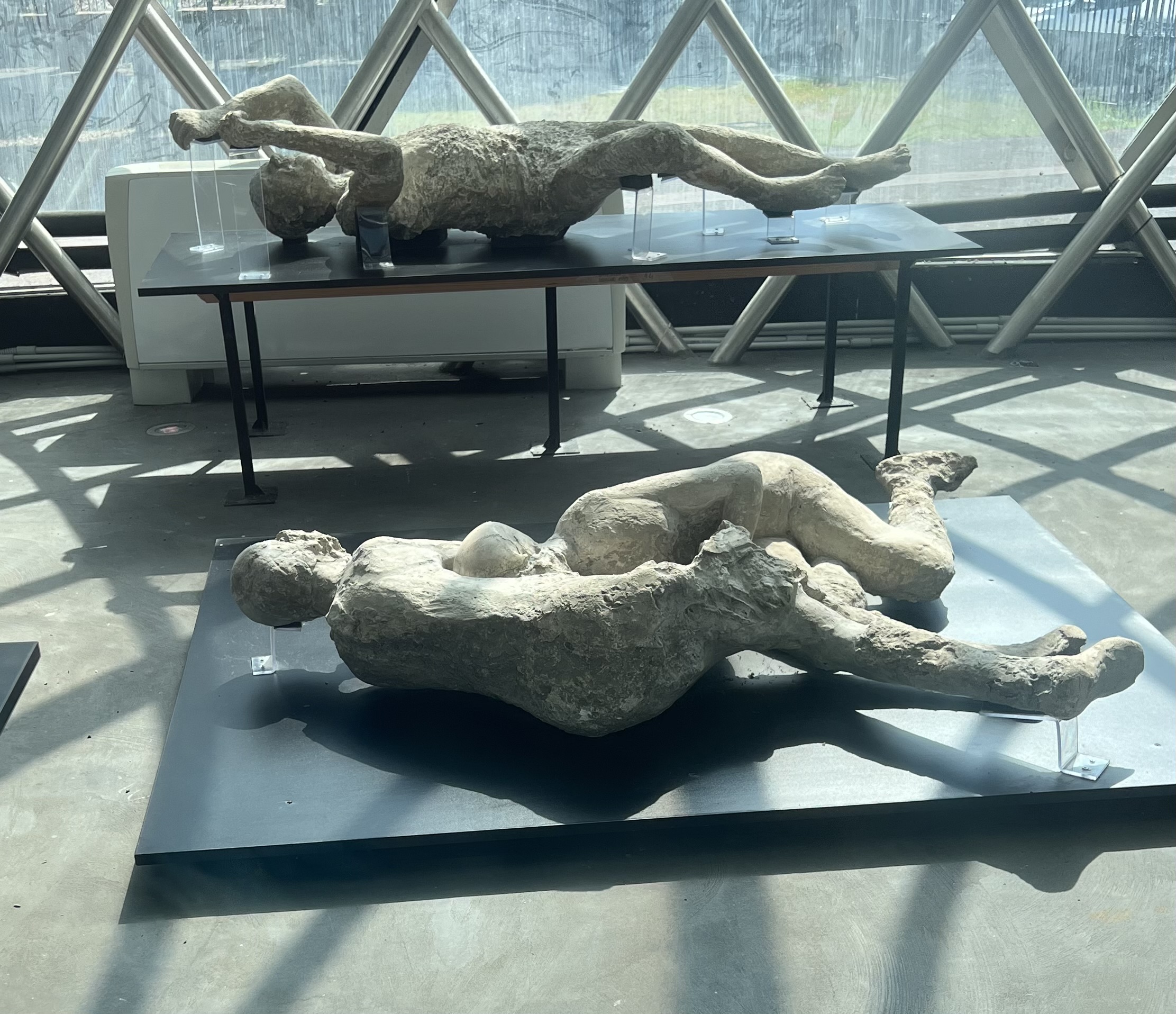
“In this vineyard 13 victims of the eruption were found including adults and children, as well as masters and servants who lost heir lives as they sought salvation whilst running towards Porta Nocera, running over the blanket of pumice which would reach 3.5 meters in depth. It was possible to create the plaster casts due to the unusual nature of the eruption of 79 A.D. for between 18 and 19 hours, a volcanic rain of pumice covered all of the open spaces of the city, the streets, the Forum, the courtyards and the gardens. Then, clouds of ash and gas overwhelmed the city and proved lethal for those who had survived thus far, causing the instantaneous death from thermal shock of anyone still in the city. The bodies of these victims remained in the positions in which they had been struck by the pyroclastic flow, and the solidified ash preserved their imprint. Pouring a mixture of gypsum and water into the voids, caused by the decomposition of organic substances, is possible to preserve the body, shape and position of the object or body that had been buried within.”





































 marschmadness