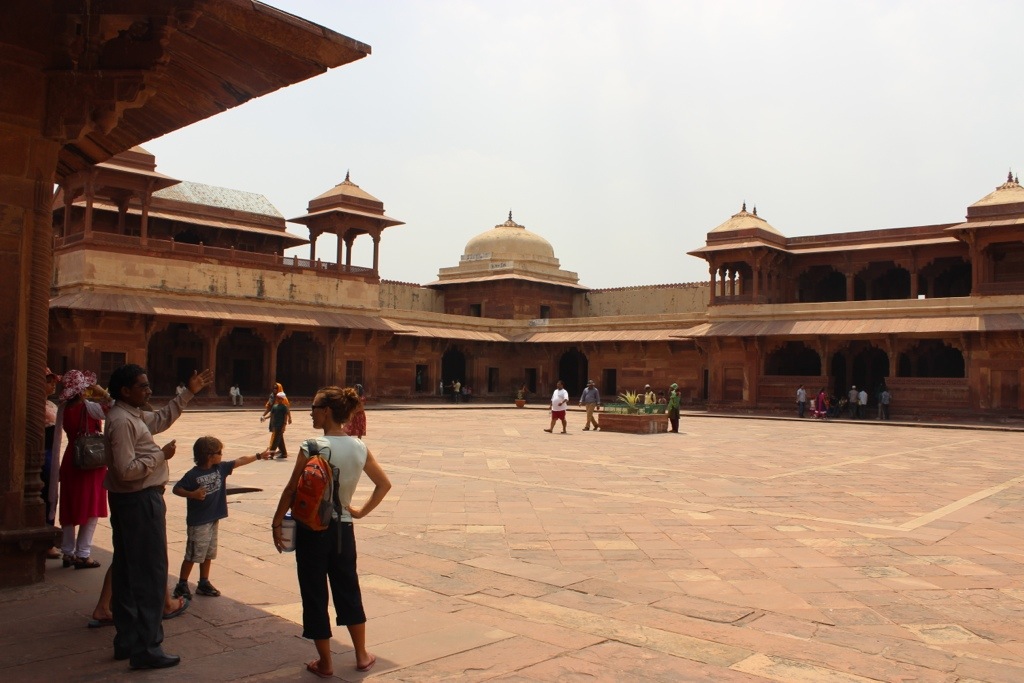


On the way to a mosque, the guy on the far right started yelling at him to leave- saying, “Boy! Why are you here? Leave!” The area is open to the public, but some of the men get protective and don’t want foreigners/women walking around. Jesse was already ahead- I told Maddux not to listen to the man and go. We continued on and saw what we wanted. I keep telling the kids not to let anyone bully them- that gives the bullies a sense of power.
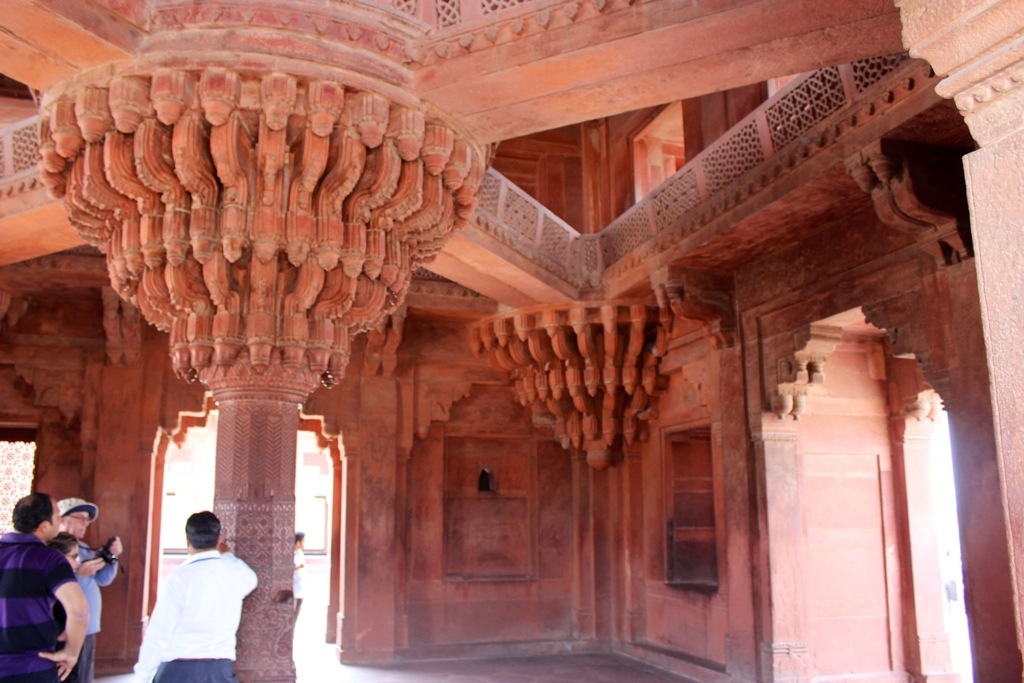
It reminded me of Star Wars when Queen Amidala was at the Congress of the Republic- except this was on a much smaller scale and none of the balconies moved. There was a central area for the ruler, then offshoots for other politicians.


Akbar was quite the lady’s man. Legend has it, he had hundreds of wives and concubines of different faiths. They would be sitting in a courtyard area and he would look out from his big bed and tell his men which woman he wanted to spend the night with. There were privacy walls so none of the women would get jealous- how nice of him! Ha
Incidentally, out of all these ladies- he only got three pregnant. One was the Hindu wife, which he rewarded with a very elaborate temple to live in because she gave him his first son. The other two were concubines. Conspiracy theorists believe that he may not have been able to produce children so maybe the women had their own fella on the side. Paternity tests were not available back then, so we’ll never know.
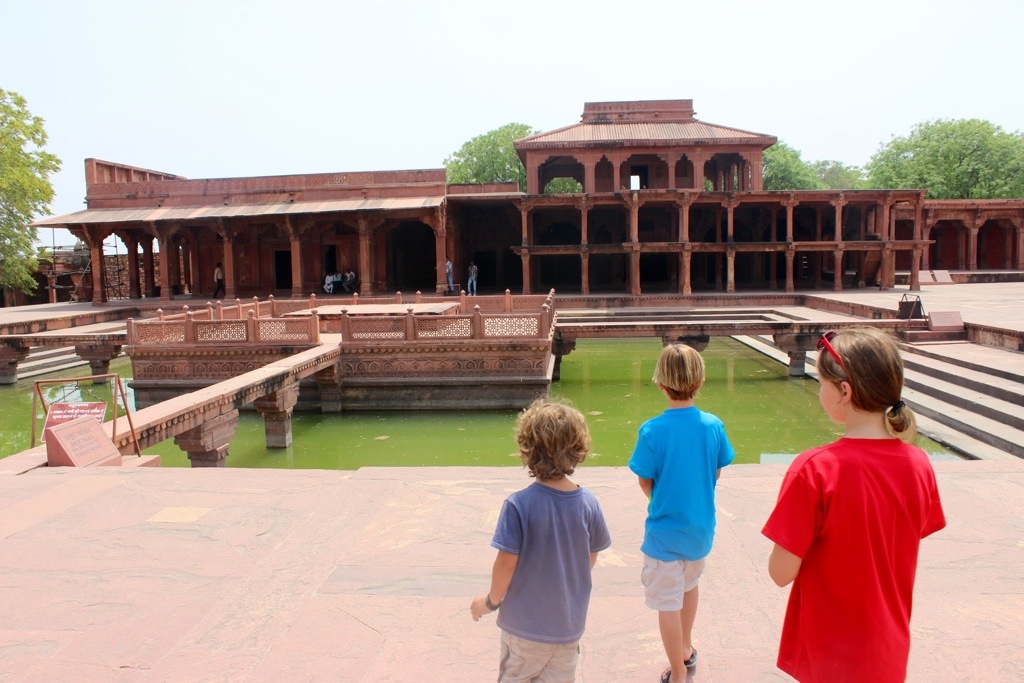
Two of the photos are of the women’s pool where they would lounge around waiting to be “chosen.” They even had a beauty parlor to up their chances. The way I look lately, King Akbar would probably ask me to leave and never return! The other photo is of a painting of Akbar. In a lot of these places, there is no money for art conservation, so what you’re looking at is the real deal. Pretty cool.
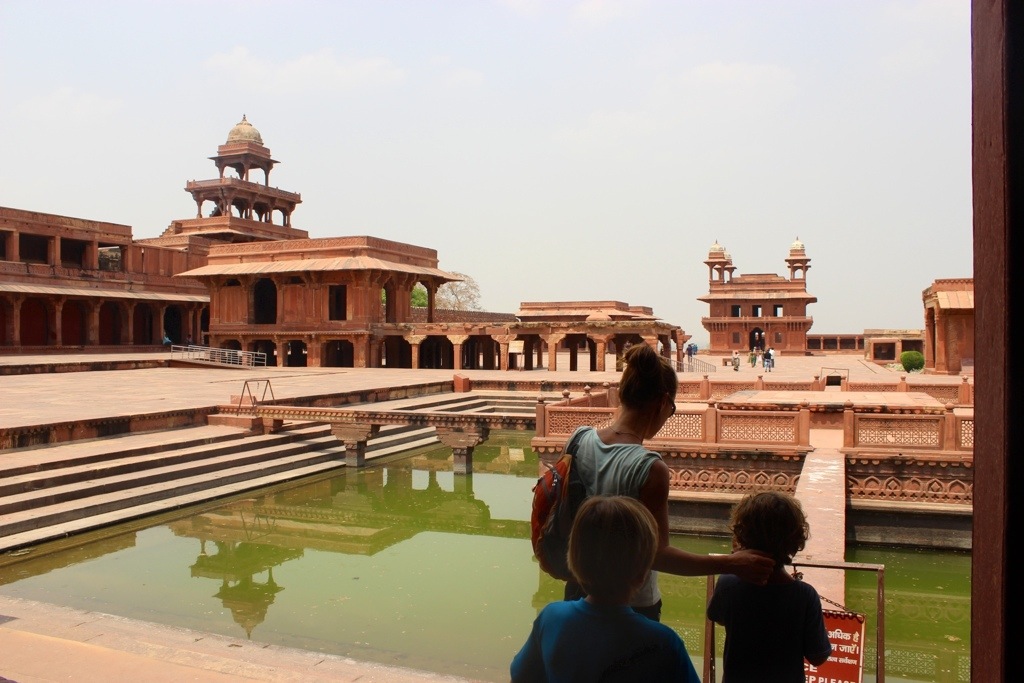
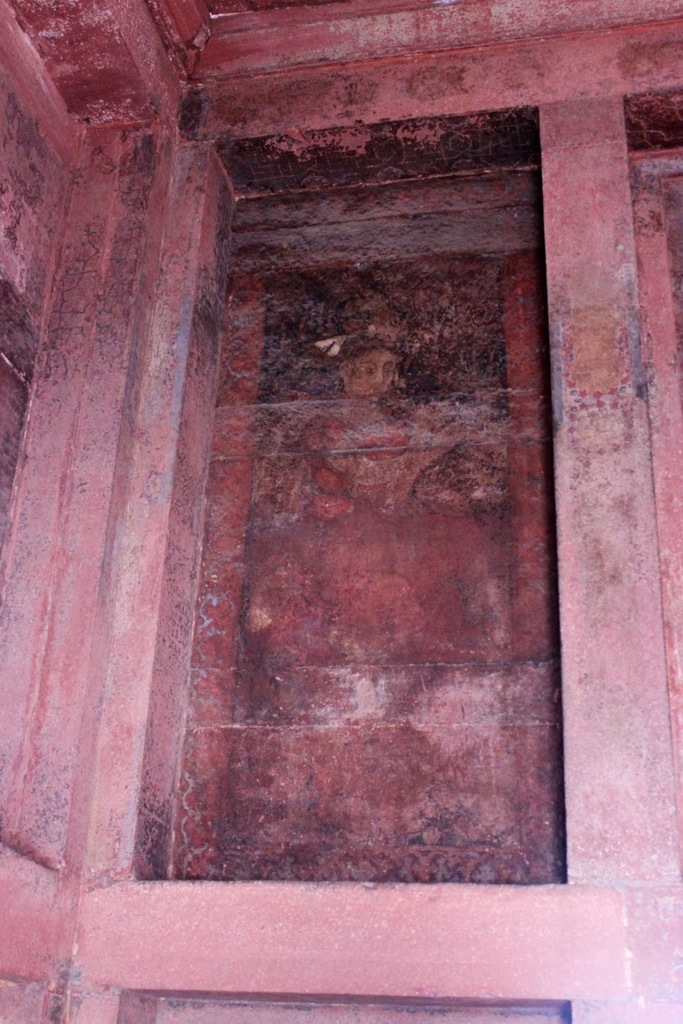
Jalaluddin Muhammad Akbár, also known as Akbar the Great (October 15, 1542 – October 27, 1605) was the ruler of the Moghul Empire from the time of his accession in 1556 until 1605. He is considered the greatest of the Moghul emperors in terms of his military conquests. He is best known for his vision of an empire as an interfaith community—a view quite exceptional for his time. Although a pious Muslim, he believed that truth underlies all religions and pioneered inter-religious collaboration through his discussions with religious scholars, his promotion of the unity of religious truth, and through his own inter-cultural marriages.
Unfortunately, his enlightened policies were short-lived, to be reversed by his successor. Bummer!
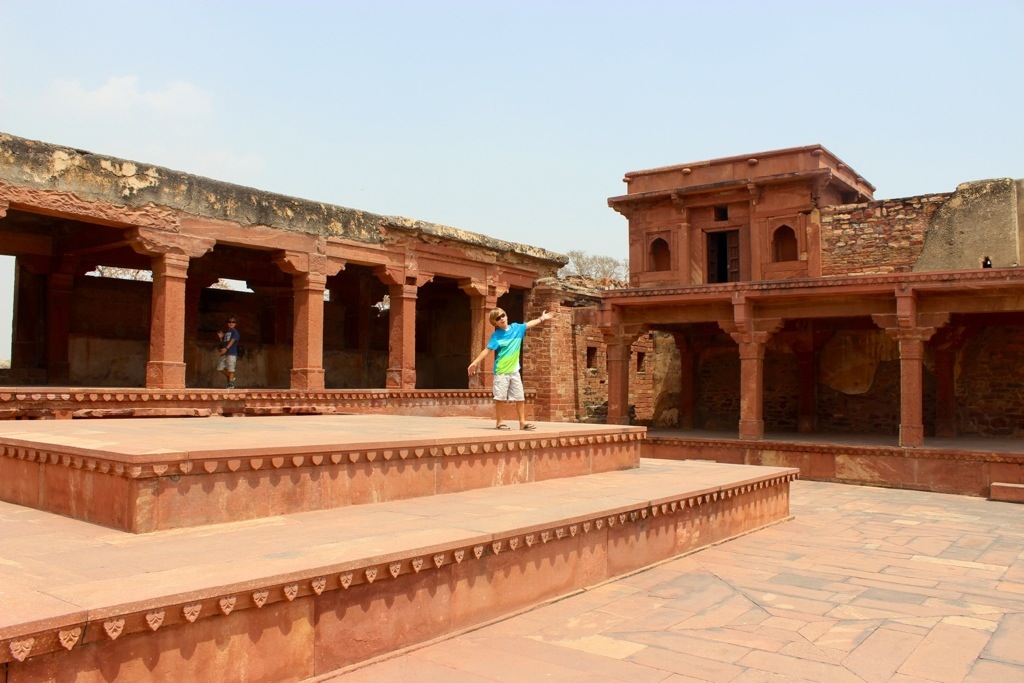
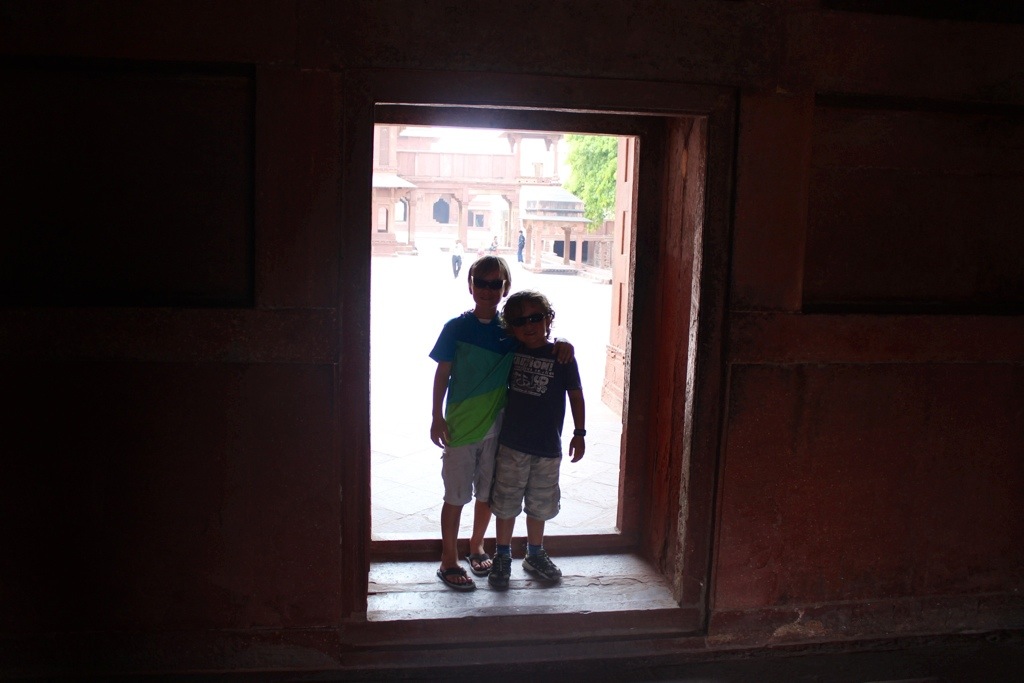
These are pictures of some of the grounds where to kill criminals, they would have an elephant repeatedly step on the accused. Ouch! The stage where Maddux is singing is actually where women would dance and sing to entertain anyone at Fatehpur Sikri.




We bought a rug to hang on the wall- it is of the Hindu God Ganesha. Ganesha’s story is below (I got the story from a site explaining Hindu Gods. There are many of them and keeping track of all of them can be daunting,)
The most well-known story is taken from the Shiva Purana. Once, while his mother Parvati wanted to take a bath, there were no attendants around to guard her and stop anyone from accidentally entering the house, so she created an image of a boy out of turmeric paste which she prepared to cleanse her body and infused life into it. Ganesha was born. Parvati ordered Ganesha not to allow anyone to enter the house, so he followed his mother’s orders. After a while Shiva (Parvati’s husband) returned from outside, and as he tried to enter the house, Ganesha stopped him. Shiva was angry at this strange little boy who challenged him. He told Ganesha that he was Parvati’s husband, and demanded that Ganesha let him go in. But Ganesha would not hear of it. Shiva lost his patience and cut off Genesha’s head. When Parvati came out and saw her son dead, she was very angry and sad. She demanded that Shiva restore Ganesha’s life.
Unfortunately, Shiva cut his head off so powerfully that they couldn’t find his head. Parvati was so enraged that she decided to destroy the entire Creation. Lord Brahma, being the Creator, naturally had his issues with this, and pleaded that she reconsider her drastic plan. She said she would, but only if two conditions were met: one, that Ganesha be brought back to life, and two, that he be forever worshipped before all the other gods. She sent Brahma out with orders to bring back the head of the first creature he crosses that is laying with its head facing North. Shiva then sent his celestial armies to find and take the head of whatever creature they happened to find asleep with its head facing north. They found a dying elephant and after its death took its head, attaching the elephant’s head to Ganesha’s body and bringing him back to life. From then on, he was called Ganapathi, head of the celestial armies, and was to be worshipped by everyone before beginning any activity.
You have to hang the rug on the wall because Ganesh is such a sacred image to Hindus. Lennon stepped on it and the guy said, “no, no, no. Ganesh is very special to us.” Lennon looked at him like ‘but it’s a carpet!’
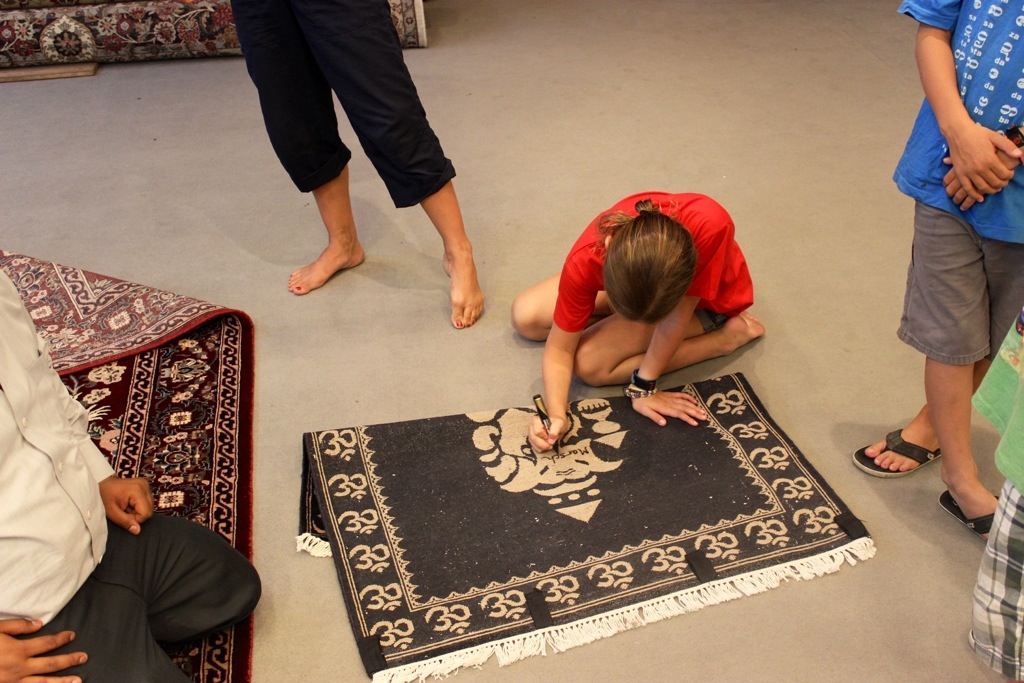
The rug shop employs men and women who get paid by the square foot. Most have a loom at home and can work when they have the time. They do periodic checks to makes sure there are no child labor laws being violated, although that would be hard to enforce. It seems any way a family can make some extra money- they will go for it. Desperate times, call for desperate measures.
The workers come to the store and get a kit with all the yarn they will need and the pattern they must follow.
The kids loved playing in the yarn pit!
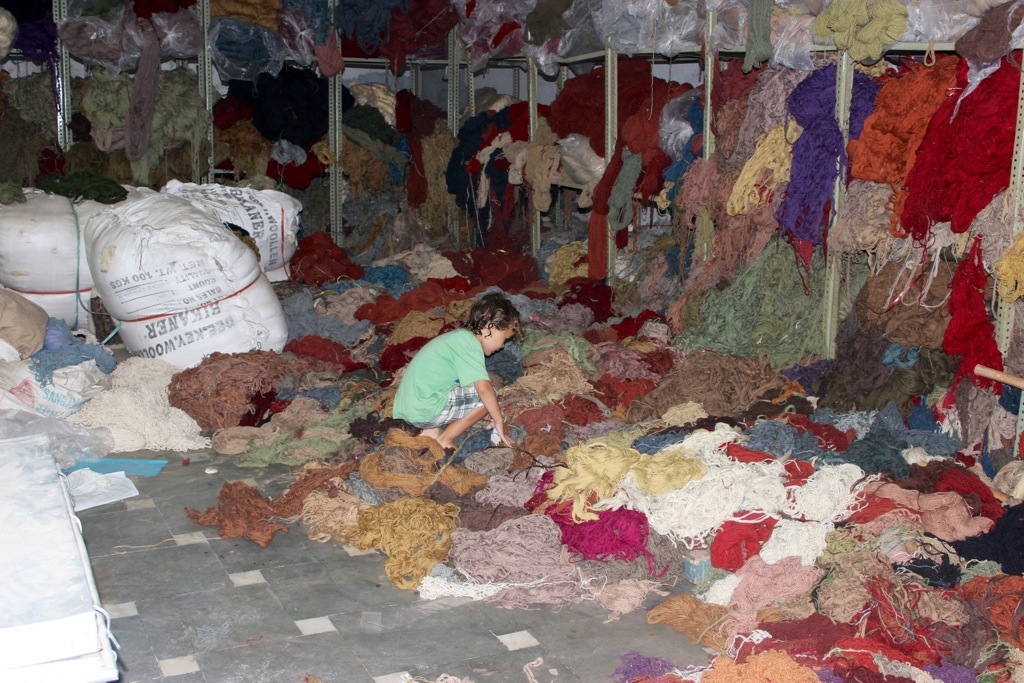


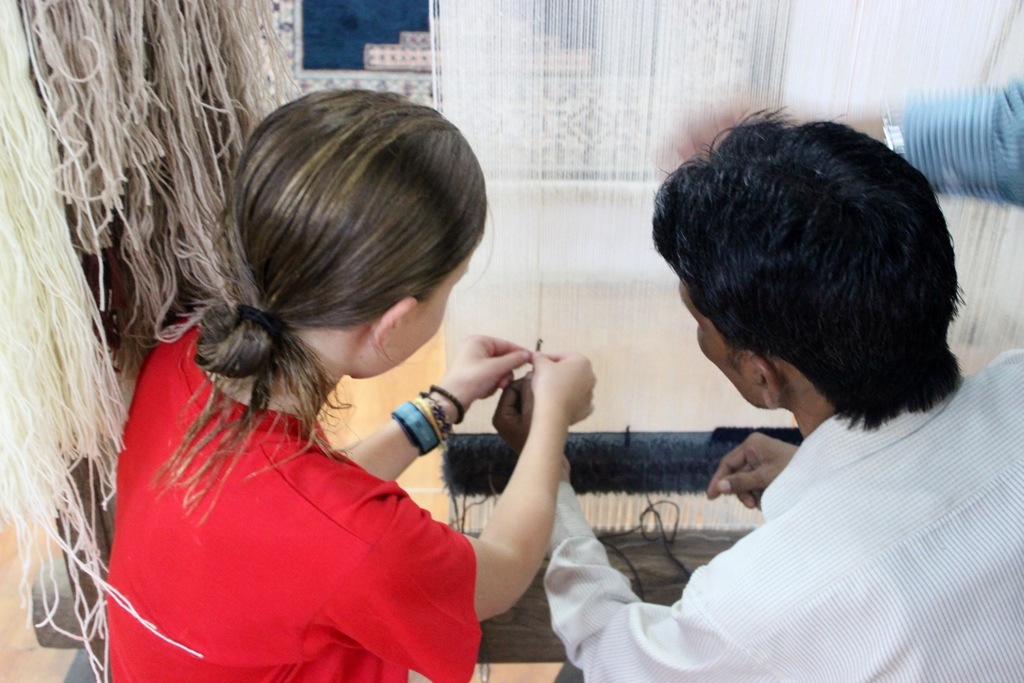
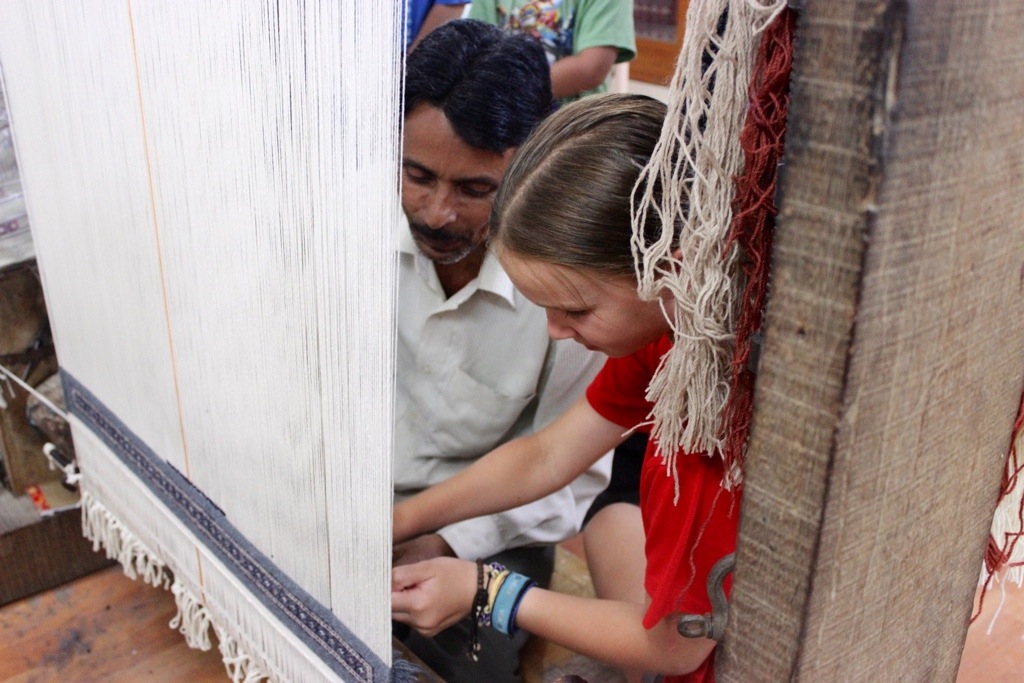
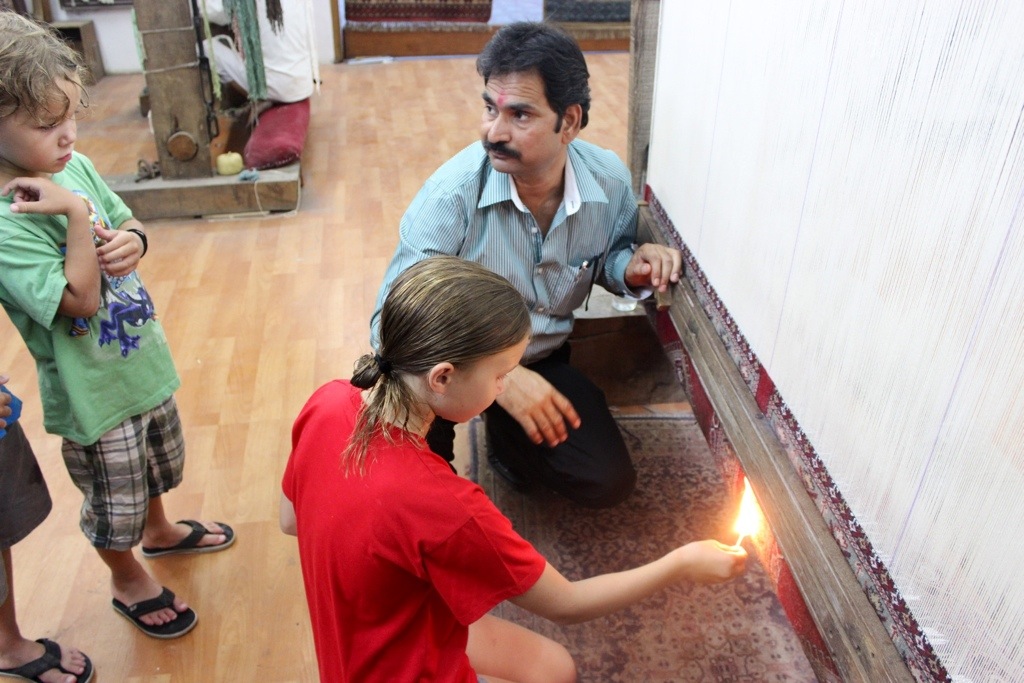
Emerson really liked this shop. She got to tie a knot on the loom. If you watch the process, you’re amazed at the amount of skill and length of time it takes to create the rugs. The backs are as beautiful as the fronts. The man showed us how they burn the back to get rid of “hairs and fuzzies” so the rug doesn’t slip on a smooth floor. Since we have three pyromaniacs- they really enjoyed this part of the process.


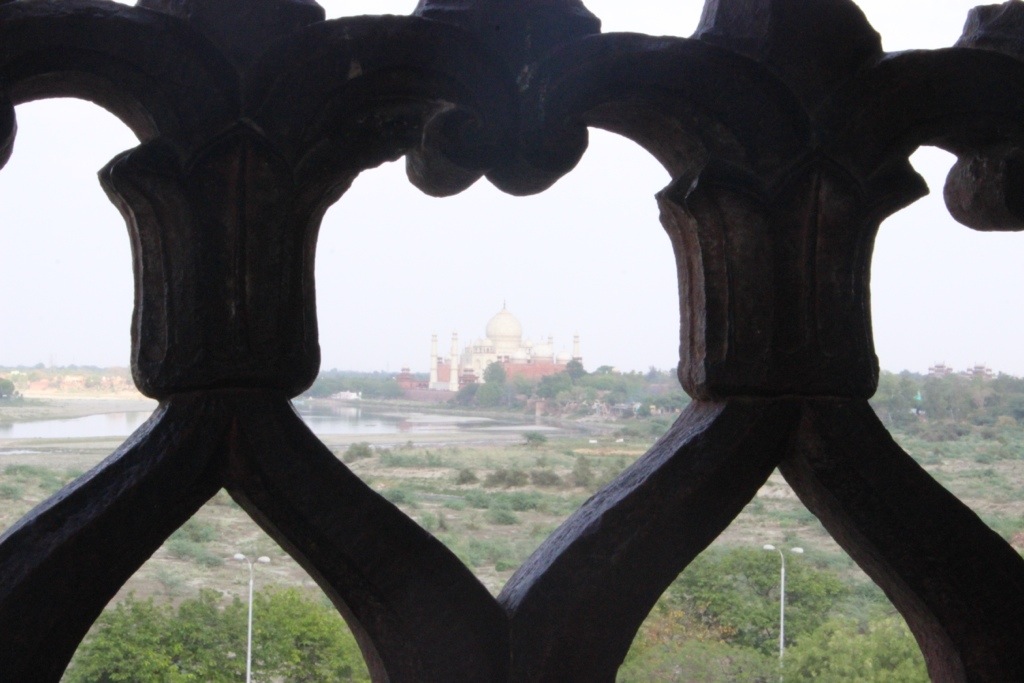
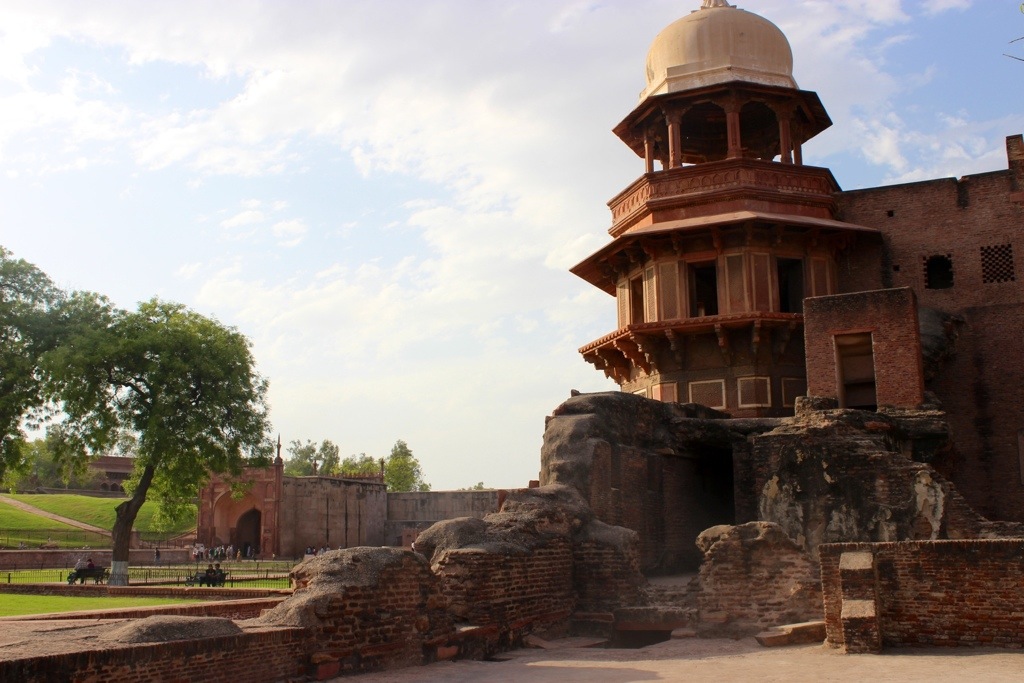
He was the first mogul Muslim king to acknowledge Christianity and Hinduism as well. He had one wife from each denomination. Jesse went to this fort without us because the kids wanted to hang out at the pool for a bit.
He built this fort- called Agra Fort.


 marschmadness